Welcome to our websites!

Top Pillow Block Ball Bearing Suppliers for Global Buyers

Choosing reliable Pillow Block Ball Bearing suppliers requires more than comparing catalog prices. Global buyers need consistent dimensions, dependable materials, and clear technical support. A bearing may look standard, yet small differences in shaft tolerance, housing alignment, or sealing can affect an entire conveyor line.

This guide examines suppliers with practical purchasing needs in mind. It considers manufacturing experience, production capacity, quality systems, and export performance. Useful evidence includes inspection reports, material certificates, load ratings, and traceable batch information. Reliable manufacturers should explain whether their products use cast iron, stainless steel, or reinforced thermoplastic housings. They should also clarify lubrication requirements, operating temperatures, corrosion resistance, and replacement availability.

Details matter.

Supplier communication deserves equal attention. A responsive technical team can help confirm bore sizes, mounting dimensions, and dynamic load calculations before an order is placed. Delivery records, packaging quality, and after-sales procedures also reveal operational reliability. However, no supplier profile tells the whole story. Published certifications may not reflect every production batch, and attractive prices can hide longer lead times or limited support.

The following overview helps purchasing teams compare Pillow Block Ball Bearing suppliers more carefully. It balances documented capabilities with practical questions that buyers should still verify independently. Factory audits, sample testing, and small trial orders remain valuable safeguards. Mistakes can happen, even with experienced manufacturers. A thoughtful evaluation reduces surprises and supports stable performance across warehouses, agricultural equipment, packaging systems, and industrial machinery.
Top Pillow Block Ball Bearing Suppliers for Global Buyers

Pillow Block Ball Bearings: Structure, Types, and Industrial Uses

Pillow Block Ball Bearings: Structure, Types, and Industrial Uses

Pillow block ball bearings combine a rolling bearing insert with a rigid mounted housing. The housing supports the shaft and simplifies installation on frames, conveyors, and machine bases. Inside, hardened balls run between inner and outer races. Seals retain grease and block dust, while set screws or eccentric collars secure the shaft.

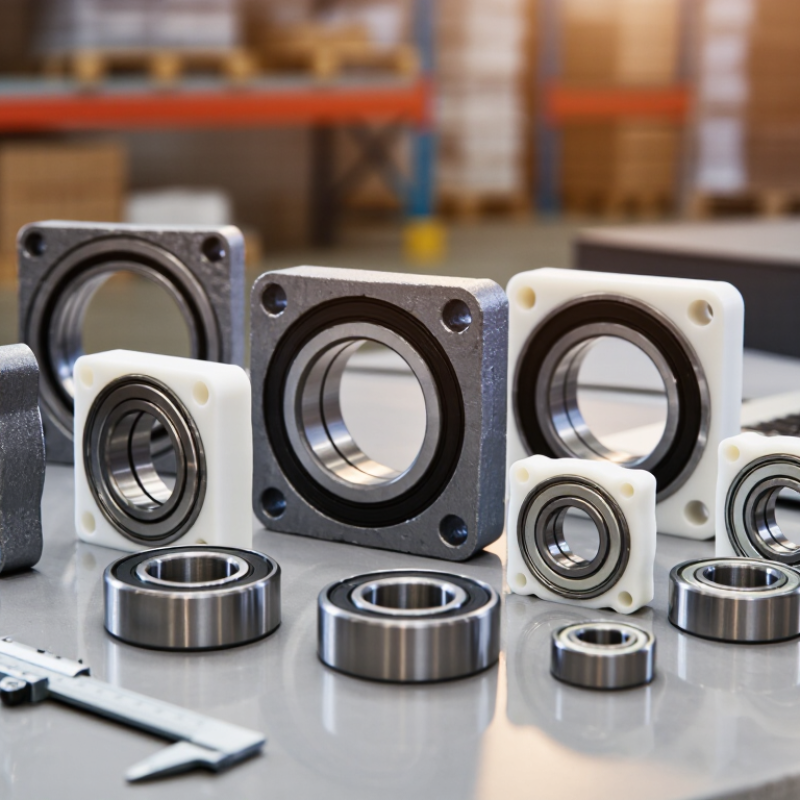
Common types include two-bolt, four-bolt, flanged, take-up, stainless-steel, and thermoplastic designs. Two-bolt units suit general conveyor work. Flanged versions fit compact side-mounted equipment. Stainless-steel models resist moisture in food-processing environments, although seal performance still needs verification. Small details matter.

Industry selection should follow ISO 281 for rating life and ISO 492 for dimensional accuracy. Grand View Research estimated the global bearings market at approximately USD 132.3 billion in 2023, with continued growth driven by automation, transport, and industrial machinery. This wider market data does not isolate pillow blocks, but it shows strong demand for dependable motion components.

Industrial users should compare dynamic load ratings, shaft tolerance, operating temperature, grease compatibility, and replacement availability. A dusty aggregate conveyor needs stronger seals than an indoor packaging line. In practice, suppliers often publish impressive load figures, yet installation errors can shorten service life dramatically. Alignment is easy to underestimate. Global buyers should also check traceability, inspection records, and delivery consistency before approving a supplier.

Key Criteria for Evaluating Global Bearing Suppliers

Top Pillow Block Ball Bearing Suppliers for Global Buyers

Choosing a pillow block ball bearing supplier requires more than comparing unit prices. Buyers should examine bearing load ratings, housing materials, sealing methods, and operating temperature ranges. Clear technical drawings and complete product specifications show professional control. Traceable batch numbers also help connect each bearing to inspection records.

Supplier reliability becomes clearer through evidence. Ask for material certificates, dimensional reports, and documented testing procedures. Confirm whether the supplier checks shaft alignment, noise, vibration, and grease quality. Production capacity matters, but stable quality matters more. A supplier may promise fast delivery, yet inconsistent stock can interrupt a maintenance schedule. Check packaging quality too. Damp cartons can damage metal surfaces before installation. Communication is another practical test. Accurate answers to technical questions often reveal real engineering knowledge.

Tips: Request samples before placing a large order. Compare measured dimensions with the drawing, not only the catalog. Review lead times in writing, including inspection and export preparation. Calculate total cost after freight, replacement risk, and possible delays. It is easy to focus too heavily on price. That can be a costly mistake. Also, do not accept impressive certificates without checking their scope and validity. A supplier may meet general standards but still lack experience with your equipment, climate, or operating speed. Small gaps in evaluation deserve attention.

Leading Pillow Block Ball Bearing Suppliers by Market Strength

Top Pillow Block Ball Bearing Suppliers for Global Buyers

Leading Pillow Block Ball Bearing Suppliers by Market Strength

Market strength in pillow block ball bearings is not measured by factory size alone. Global buyers should examine production capacity, regional inventory, and delivery consistency. A supplier with warehouses near major ports can reduce delays during urgent maintenance work. Technical support also matters when shaft sizes, housing materials, or sealing conditions change.

In field purchasing, I have found that reliable suppliers provide clear load ratings, mounting tolerances, and inspection records. They should explain performance under dust, moisture, vibration, and frequent starts. Strong suppliers usually maintain stable raw material channels and documented quality procedures. Still, no ranking is perfect. A large supplier may offer broad capacity but respond slowly to custom requests. A smaller supplier may provide better engineering attention, yet struggle during sudden demand increases.

Buyers should compare sample inspection results, packaging quality, and after-sales response before signing long-term contracts. Ask for traceable batch information. Check it carefully. Market reputation also grows through consistent export documentation and realistic lead times. Promises are easy. Evidence is better.

Pricing deserves careful review because low initial cost can hide shorter service life or inconsistent dimensions. A dependable supplier balances cost, technical accuracy, delivery resilience, and communication. That balance often reveals genuine market strength.

Comparing Supplier Quality, Certifications, Pricing, and Support

Pillow block ball bearing suppliers differ sharply in quality, certification control, pricing, and after-sales support. In practical sourcing, buyers should inspect more than polished product photos. Ask for housing material details, seal design, grease type, static load ratings, and dimensional tolerances. A reliable supplier can provide inspection records for bore diameter, surface finish, and shaft alignment. Small details matter. A rough mounting surface may cause vibration within weeks.

Certifications deserve careful checking. ISO 9001 can indicate a controlled quality system, but it does not prove every bearing meets your specification. Request the certificate scope, issuing body, expiry date, and recent test reports. Material traceability is useful when orders involve harsh environments or continuous machinery operation. Some suppliers provide batch numbers and documented sampling procedures. Others provide general statements only. That difference should influence your risk assessment.

Pricing comparisons should include samples, minimum order quantities, packaging, freight, duties, tooling, and replacement terms. The lowest unit price may create a higher landed cost. Be cautious. Evaluate how quickly the supplier answers technical questions and whether engineers review drawings accurately. Strong support includes installation guidance, lubrication advice, failure analysis, and clear warranty procedures. Response time should be tested before purchase. Send one detailed inquiry and note whether the reply addresses each question. My own judgment would remain flexible here: fast communication is valuable, but it cannot replace consistent inspection data and proven delivery performance.

Global Purchasing Steps for Selecting the Right Supplier

Top Pillow Block Ball Bearing Suppliers for Global Buyers

Global purchasing should begin with a measurable specification, not a supplier shortlist. Record shaft diameter, radial load, speed, operating temperature, housing material, seal type, and required service life. ISO 281 provides the standard method for calculating bearing rating life. Request test reports, material certificates, dimensional data, and batch traceability. A sample should run under the same dust, moisture, and load conditions found in your facility. Small details matter.

Logistics can change the purchase decision. UNCTAD’s Review of Maritime Transport reports that about 80% of global merchandise trade by volume moves by sea. Therefore, compare production capacity, port location, packaging strength, lead time, Incoterms, and landed cost. Ask for a documented quality process, corrective-action records, and an inspection plan before placing a large order. ISO 9001 certification is useful evidence, but it is not proof of consistent bearing performance.

A supplier audit should include factory records, gauge calibration, grease control, and final inspection samples. Do not rely on polished certificates alone. That is an easy mistake. Independent inspections can verify noise, vibration, hardness, and bore accuracy before shipment. A clear warranty and replacement procedure also reduce operational risk. However, even a strong supplier may miss a packaging weakness or seasonal delay, so review the decision after the first delivery and adjust the approval criteria.