2026 Top 25mm Pillow Block Bearing Types for Global Buyers?
Choosing the right 25mm Pillow Block Bearing in 2026 requires more than comparing prices and catalogue photographs. Global buyers must examine bore accuracy, housing material, sealing design, load direction, speed, and operating temperature. A 25mm shaft may appear standard, yet mounting conditions can change performance significantly.
Dr. Robert B. Errichello, a respected bearing-failure investigator, repeatedly emphasized this practical warning: “The root cause of most bearing failures is improper lubrication.” His point remains relevant for every 25mm Pillow Block Bearing application. Grease quantity, relubrication access, moisture exposure, and contamination control often determine service life. Small details matter.
This guide reviews the leading 25mm pillow block types available for international purchasing. It considers cast-iron UCP205 units, stainless-steel alternatives, thermoplastic housings, eccentric-lock designs, set-screw inserts, and corrosion-resistant options. Each type suits different environments. Food-processing lines need cleaner surfaces, while conveyors may prioritize rigidity and impact resistance.
Specifications still require verification. Bore tolerance, dynamic load rating, shaft fit, replacement insert availability, and certification documents should be checked before ordering. Supplier claims can look impressive. Field results may differ.
A useful inspection includes shaft alignment, mounting torque, noise, temperature, and seal condition. Record the evidence.
The most expensive bearing is not always the safest choice. The cheapest one may create hidden downtime. Buyers should compare total operating risk, not just unit cost. Some catalogue descriptions remain incomplete, especially across regional markets. That uncertainty deserves attention. This 2026 overview therefore combines technical selection principles with practical purchasing concerns, helping engineers, distributors, and maintenance teams choose a dependable 25mm Pillow Block Bearing for real operating conditions.
25mm Pillow Block Bearings: Definition, Structure, and Operating Principles
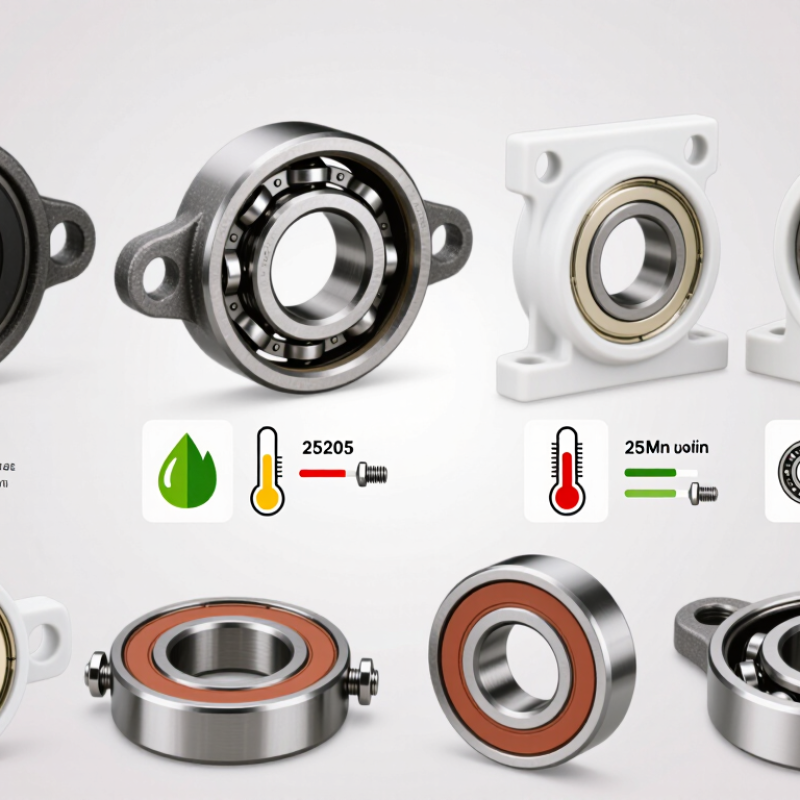
A 25mm pillow block bearing is a mounted bearing unit designed for shafts with a 25mm diameter. It supports rotating shafts while fixing the bearing assembly to a machine frame. The unit normally includes a bearing insert, cast or pressed housing, seals, and mounting holes. Some designs use set screws, while others use an eccentric locking collar. The choice affects installation speed and shaft holding strength.
Inside the unit, the inner ring rotates with the shaft. Steel balls roll between the inner and outer rings. The outer ring stays supported by the housing. This rolling action reduces sliding friction and allows radial loads to pass into the machine frame. Small axial loads may be accepted, but the exact capacity depends on the bearing design. Heat, noise, and vibration usually increase when the shaft is misaligned or overloaded.
Installation needs care. The shaft should be clean, straight, and free from deep scratches. Tightening fasteners unevenly can distort the housing. That mistake is common. A thin film of suitable grease helps protect the rolling elements, although too much grease can also raise operating temperature. During inspection, check looseness, seal damage, unusual sound, and temperature changes. A practical concern remains: catalog load ratings rarely match real conditions perfectly. Dust, shock loads, poor alignment, and irregular maintenance can shorten service life. Reliable selection therefore requires checking the shaft speed, load direction, temperature, lubrication method, and surrounding environment.
Major Types of 25mm Pillow Block Bearings and Their Design Differences
25mm Pillow Block Bearing Types and Their Design Differences
A 25mm pillow block bearing supports a shaft through a mounted housing. The bore size is only one selection point. Housing shape, locking method, sealing design, and load direction also affect performance. Standard fixed pillow blocks suit conveyor rollers, fans, and light industrial drives. Their rigid base keeps shaft alignment stable on a flat frame.
Take-up pillow blocks use a sliding housing. They help tension belts and chains without moving the motor. The trade-off is reduced rigidity during heavy radial loading. Flange-mounted versions position the shaft closer to a machine wall. Two-bolt and four-bolt patterns change installation strength and space requirements. Split housings allow easier inspection and replacement. They are useful where removing a long shaft would cause costly downtime.
The insert bearing may use set screws, an eccentric collar, or an adapter sleeve. Set screws are simple, but incorrect tightening can mark the shaft. Eccentric collars grip well when rotation direction remains consistent. Adapter sleeves support more precise mounting, though installation takes longer. Metal housings tolerate impact and heat better. Polymer housings resist moisture and reduce weight. Seals matter near dust, washdown spray, or fine powder. A poorly chosen seal can create heat. Field checks should include shaft play, grease condition, mounting flatness, and unusual noise. Do not trust the catalog alone. I have seen a correctly sized bearing fail early because the base was slightly twisted. Clearance, lubrication, and real operating temperature still deserve careful review.
Global Buyer Guide to Standards, Sizes, Sourcing, and Quality Checks
For 2026 purchasing, a 25mm pillow block bearing should be selected by application, not appearance. Common types include set-screw inserts, eccentric-collar inserts, flanged units, and take-up housings. A 25mm bore must match the shaft precisely. Measure the shaft.
Check dimensional references before comparing quotations. ISO 15 helps verify bearing boundary dimensions, while ISO 492 supports tolerance evaluation for applicable rolling bearings. However, insert bearing assemblies may follow product-specific specifications. Ask suppliers for controlled drawings, material grades, sealing arrangements, and grease information. Metric bore details should never be assumed from similar imperial models.
Sourcing requires more than a low unit price. Request batch traceability, inspection reports, and samples from the actual production lot. Check bore size, housing width, mounting-hole spacing, radial clearance, and visible runout. A torque test and rotation check can reveal roughness or seal drag. Confirm corrosion protection for humid shipping routes. Packaging should prevent impact and moisture.
A certificate is not proof. I have seen correct paperwork paired with inconsistent dimensions. Independent inspection is worthwhile for large orders. Review shaft tolerance, operating speed, load direction, temperature, and relubrication access with an engineer. Keep records. Some buyers still overlook mounting alignment, which can shorten bearing life even when the bearing itself passes inspection. Allow room for uncertainty, especially when supplier drawings are incomplete or translated poorly.
2026 Global Buyer Guide: 25 mm Pillow Block Bearing Types
ISO 286-2 fit reference for sourcing and quality checks on common 25 mm insert-bearing housing styles.
Common housing types
Pillow block, flanged, two-bolt flange, take-up, and tapped-base styles are commonly available with a 25 mm nominal bore.
Shaft inspection
For an h6 shaft in the 18–30 mm diameter range, the ISO reference limits are 24.987–25.000 mm.
Housing inspection
For an H7 housing bore in the 18–30 mm range, the ISO reference limits are 25.000–25.021 mm.
Values are nominal ISO 286-2 dimensional fit references. Always confirm the supplier drawing, bearing clearance, sealing arrangement, load rating, and material before purchase.
2026 Selection Criteria for Applications, Maintenance, and Total Cost
2026 Top 25mm Pillow Block Bearing Types for Global Buyers
Selecting a 25mm pillow block bearing starts with the application, not the catalog price.
Fixed units suit shafts that need stable axial positioning. Expansion units tolerate thermal growth in longer conveyor systems. Cast iron handles rigid industrial frames, while thermoplastic resists moisture and cleaning chemicals. Stainless steel is useful near washdown areas, but it may cost more than necessary. Check radial load, speed, shaft alignment, temperature, and contamination before choosing.
Tips: Measure the shaft directly. Confirm housing bolt spacing. Inspect seals and relubrication access. A small alignment error can create heat, noise, and early wear. In dusty areas, better sealing often reduces maintenance visits. Do not select food-contact materials without verifying the complete application requirements.
Maintenance affects total cost more than many buyers expect.
Use the specified lubricant amount, not an instinctive extra dose. Record vibration, temperature, and noise during routine inspections. A bearing that runs quietly today may still show early damage tomorrow. I have seen low-cost units become expensive after repeated replacements and production delays. However, overspecifying stainless construction can also waste budget where conditions are dry and clean. Compare purchase price, service life, labor, downtime, lubrication, replacement availability, and disposal needs. The cheapest choice is not always the economical one.