
Top 25mm Pillow Block Bearing Suppliers Worldwide?
Choosing a reliable 25mm Pillow Block Bearing supplier requires more than comparing catalog prices. The right partner should provide accurate bore dimensions, stable housing quality, dependable seals, and clear technical documentation. These details matter in conveyor lines, agricultural equipment, packaging machines, and light industrial assemblies.
This guide reviews leading suppliers worldwide through practical purchasing criteria. It considers product range, manufacturing experience, quality systems, material options, customization support, delivery performance, and after-sales communication. A strong supplier should explain whether the bearing uses chrome steel, stainless steel, or another suitable material. It should also clarify dynamic load ratings, lubrication requirements, shaft tolerance, and operating temperature limits.
Small details reveal capability. Ask for inspection reports, batch traceability, sample approval, and test information before placing a large order. Check whether the supplier can maintain consistent clearance and alignment across repeated shipments. Packaging also deserves attention, especially when bearings travel through humid ports or remain in storage.
Not every popular supplier will fit every application. Some offer excellent pricing but limited engineering support. Others provide strong technical service with longer lead times. Rankings can change with region, order volume, and product availability. That part is easy to overlook.
The suppliers discussed here are not presented as permanent winners. Their suitability depends on your equipment, budget, standards, and delivery expectations. Compare evidence carefully, request current quotations, and verify claims with samples. A careful decision reduces vibration, premature wear, unexpected downtime, and costly replacement work.
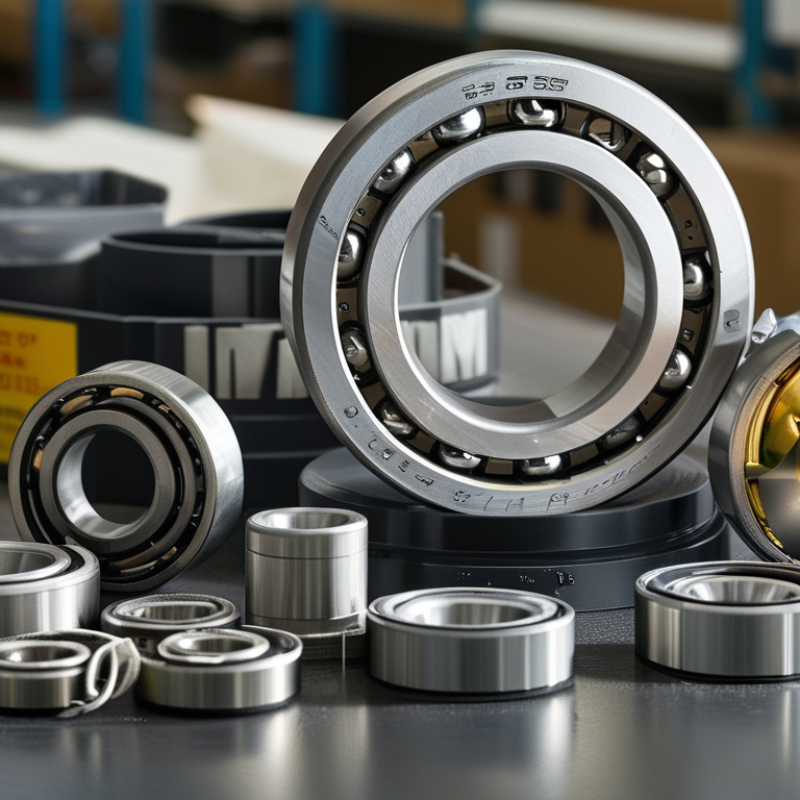
25 mm Pillow Block Bearings: Bore Sizes, Loads, and ISO 281 Ratings
A 25 mm pillow block bearing uses a nominal 25 mm bore for a matching shaft. The real fit still needs checking. Shaft tolerance, surface finish, and locking method affect vibration and service life. A loose fit may creep under load. A tight fit can reduce internal clearance.
Load selection should separate radial, axial, and shock forces. A conveyor bearing may face steady radial loading, while a belt drive adds tension and misalignment. Check the bearing’s dynamic load rating, static load rating, speed limit, and housing strength. Dirt, water, poor lubrication, and tilted shafts can reduce life quickly. Small details matter.
ISO 281 calculates basic rating life, usually called L10. It represents the number of revolutions that 90% of identical bearings can reach under stated conditions. The calculation uses the dynamic load rating and equivalent dynamic load. It is not a guarantee for every installation. ISO 281 does not fully capture contamination, mounting errors, or sudden impacts.
Be careful with catalog numbers.
In field inspections, a 25 mm unit may appear correctly sized but still run hot. Measure shaft diameter at several points, inspect the set-screw contact, and check mounting flatness. A rating value can look authoritative while the application data remains incomplete. Recheck the load estimate when belt tension, vibration, or washdown exposure changes.
| Reference Configuration | Nominal Bore | Insert Bearing Series | Housing Style | Typical Housing Material | Reference Geometry | Typical Dynamic Load Rating, C | Typical Static Load Rating, C0 | ISO 281 L10 Life Basis | Sealing and Lubrication | Common Application |
|---|---|---|---|---|---|---|---|---|---|---|
| UCP205 | 25 mm | UC205 insert | Two-bolt pedestal pillow block | Cast iron | Insert OD: 52 mm; insert width: 34 mm; housing length: approximately 140 mm; mounting-hole pitch: approximately 106 mm | Approximately 14.0 kN | Approximately 7.85 kN | Ball-bearing equation: L10 = (C/P)3 × 106 revolutions | Double-lip contact seals; factory grease fill is commonly lithium-based | Conveyors, fans, agricultural machinery, and general shaft support |
| UCP205-16 | 25.4 mm / 1 in | UC205-16 inch-bore insert | Two-bolt pedestal pillow block | Cast iron | Housing geometry is generally shared with the UCP205 family; shaft bore is 0.0625 in larger than 25 mm | Product-specific; commonly close to the UC205 range | Product-specific; commonly close to the UC205 range | Use the supplier’s C and P values; do not substitute 25 mm and 1 in ratings without verification | Contact seals with relubrication provision on many housing designs | Imperial replacement equipment and mixed-unit machinery |
| UCF205 | 25 mm | UC205 insert | Four-bolt square flange | Cast iron or pressed steel | Typical flange outside dimension: approximately 95 mm; bolt-hole pitch: approximately 75 mm | Approximately 14.0 kN for the insert; installed rating depends on housing and mounting | Approximately 7.85 kN for the insert | Calculate using the actual equivalent dynamic load, including radial and axial components | Sealed insert; grease fitting may be provided through the housing | Side-mounted shafts, processing equipment, and framed machinery |
| UCFL205 | 25 mm | UC205 insert | Two-bolt oval flange | Cast iron or pressed steel | Oval flange allows limited mounting-hole adjustment; exact length and pitch vary by housing design | Approximately 14.0 kN insert reference value | Approximately 7.85 kN insert reference value | ISO 281 rating life must be based on the applied load at the bearing, not motor power alone | Double contact seals; common grease operating temperature range is approximately −20 °C to +100 °C | Compact conveyor frames and side-panel installations |
| UCT205 | 25 mm | UC205 insert | Take-up or sliding housing | Cast iron | Housing permits axial adjustment for belt tensioning; slot dimensions vary with the take-up design | Approximately 14.0 kN insert reference value | Approximately 7.85 kN insert reference value | Use the worst operating load after shaft alignment and belt-tension forces are included | Sealed insert with grease replenishment commonly available | Belt conveyors, chain drives, and tension-adjustable shafts |
| Stainless UCP205 | 25 mm | Stainless-steel UC205-type insert | Two-bolt pedestal pillow block | Stainless steel or corrosion-resistant alloy | Usually follows the UC205 envelope, but flange and bolt dimensions must be checked against the individual drawing | Often lower than standard cast-iron versions; verify the catalog value | Often lower than standard cast-iron versions; verify the catalog value | Apply ISO 281 with the stainless insert’s published C value rather than the standard-steel reference | Corrosion-resistant seals; food-grade grease may be specified separately | Washdown areas, food processing, packaging, and outdoor equipment |
| Polymer UCP205 | 25 mm | UC205-type insert | Polymer composite pedestal housing | Thermoplastic or thermoset polymer | Geometry may match a standard pedestal pattern, but allowable mounting torque and housing stiffness are lower | Insert rating may be approximately 14.0 kN; assembly rating can be lower | Assembly rating depends strongly on housing temperature and mounting conditions | Use the lower of the insert life rating and the polymer housing load limit | Low-maintenance sealed bearing; suitable grease compatibility must be confirmed | Corrosive environments, light conveyors, and low-noise equipment |
| Eccentric-Lock UCP205 | 25 mm | UC205 insert with eccentric collar | Two-bolt pedestal housing | Cast iron | Nominal UC205 envelope; eccentric collar adds a locking feature and requires correct rotation direction during installation | Approximately 14.0 kN insert reference value | Approximately 7.85 kN insert reference value | ISO 281 life assumes correct collar locking, shaft fit, and no slippage under the applied load | Contact seals; relubrication is commonly possible | Rotating shafts subject to reversing or moderate shock loads |
| Set-Screw UCP205 | 25 mm | UC205 insert with two set screws | Two-bolt pedestal housing | Cast iron | UC205 envelope; two radial set screws secure the inner ring to the shaft | Approximately 14.0 kN insert reference value | Approximately 7.85 kN insert reference value | Rating-life calculations require proper set-screw tightening and adequate shaft hardness | Double-lip seals; grease fitting is common on industrial housings | General industrial drives and shafts with straightforward installation access |
| High-Temperature UCP205 | 25 mm | Heat-resistant UC205-type insert | Two-bolt pedestal housing | Cast iron or heat-resistant alloy | May retain the standard UC205 envelope; clearances, seals, and grease are modified for temperature | Temperature-dependent; published load ratings may be derated | Temperature-dependent; published load ratings may be derated | ISO 281 L10 is only valid when operating temperature, lubricant, and internal clearance are within specification | High-temperature grease and nonstandard seals may be required | Ovens, dryers, kilns, and hot-air handling systems |
| Food-Grade UCP205 | 25 mm | UC205-type insert | Pedestal housing for hygienic service | Stainless steel or approved polymer | Usually based on the UCP205 mounting concept; hygienic gaps and surface finish can differ | Verify the certified product rating; it may be below the standard cast-iron reference | Verify the certified product rating | Use the published C value, lubricant factor, contamination conditions, and operating speed | Food-grade lubricant and washdown-resistant seals should be specified | Food, beverage, pharmaceutical, and sanitary packaging lines |
| Heavy-Duty UCP205 | 25 mm | UC205-type insert with reinforced housing | Reinforced two-bolt pedestal | High-strength cast iron or ductile iron | May use a standard bore and insert while increasing housing stiffness, base thickness, or mounting support | Insert reference: approximately 14.0 kN; housing capacity must be checked separately | Insert reference: approximately 7.85 kN; shock capacity is application-dependent | For impact or vibration, verify static safety factor in addition to ISO 281 dynamic life | Heavy-duty seals and relubrication ports are commonly specified | Crushers, aggregate conveyors, material handling, and high-vibration machinery |
Related Posts
-
How to Choose the Right Pillow Block Flange Bearing for Your Needs?
-
Exploring Split Pillow Block Bearings at the 138th Canton Fair 2025: Industry Insights and Trends
-
What is a Small Pillow Block Bearing and How Does it Work?
-
China Best Split Pillow Block Bearings for Global Buyers?
-
Unlocking the Benefits of Self Aligning Pillow Block Bearings in Modern Machinery
-
How to Choose the Right Ucp Bearing for Your Needs?