Top 10 Roller Bearing Types You Should Know About?
In the world of machinery, the term "Roller Bearing" holds significant importance. John Smith, a renowned expert in the bearing industry, once stated, "The right roller bearing can change the way machines operate." This insight reflects the pivotal role these components play in enhancing performance and durability.
Roller bearings come in various types, each designed for specific applications. The diversity within this category can be overwhelming. For instance, cylindrical and spherical bearings each serve unique functions. Understanding these distinctions is crucial for engineers and technicians alike. Improper selection may lead to mechanical failures or inefficiencies.
Moreover, the impact of roller bearings extends beyond mere functionality. Their design influences operational cost and machine lifespan. Yet, not all products in this field are reliable. It’s essential to critically evaluate options available in the market. Choosing quality over convenience can often mean the difference between success and failure in engineering tasks.
Overview of Roller Bearings: Definition and Functionality
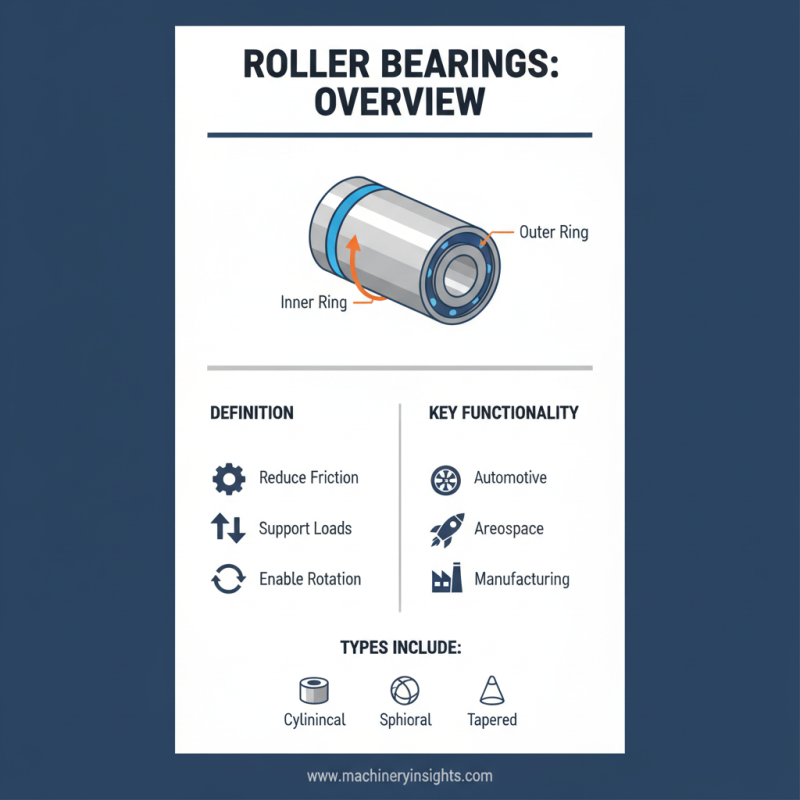
Roller bearings are crucial components in machinery. They reduce friction between moving parts, allowing for smoother operation. These bearings support loads and enable rotation in various applications. They come in several types, each serving specific purposes. The efficiency of roller bearings is pivotal in industries such as automotive, aerospace, and manufacturing.
According to a report by the Rolling Bearings Market, demand for roller bearings is projected to grow substantially. The global market is expected to reach $15 billion by 2025. This growth reflects the increasing need for efficient machinery. However, not all roller bearings meet the required standards. Some may fail under high-stress conditions. This highlights the importance of choosing the correct type based on application needs.
In regions with high industrial activity, roller bearing failure can lead to significant downtime. This can cost companies thousands of dollars in lost productivity. Many manufacturers overlook the importance of regular maintenance. The lack of proper care is a major reason for premature failure. Understanding different roller bearing types can aid in making informed choices.
Types of Roller Bearings: Key Differences and Applications
Roller bearings are essential components in many mechanical systems. Understanding their types and applications is crucial. There are several key distinctions among them, primarily based on design and function.
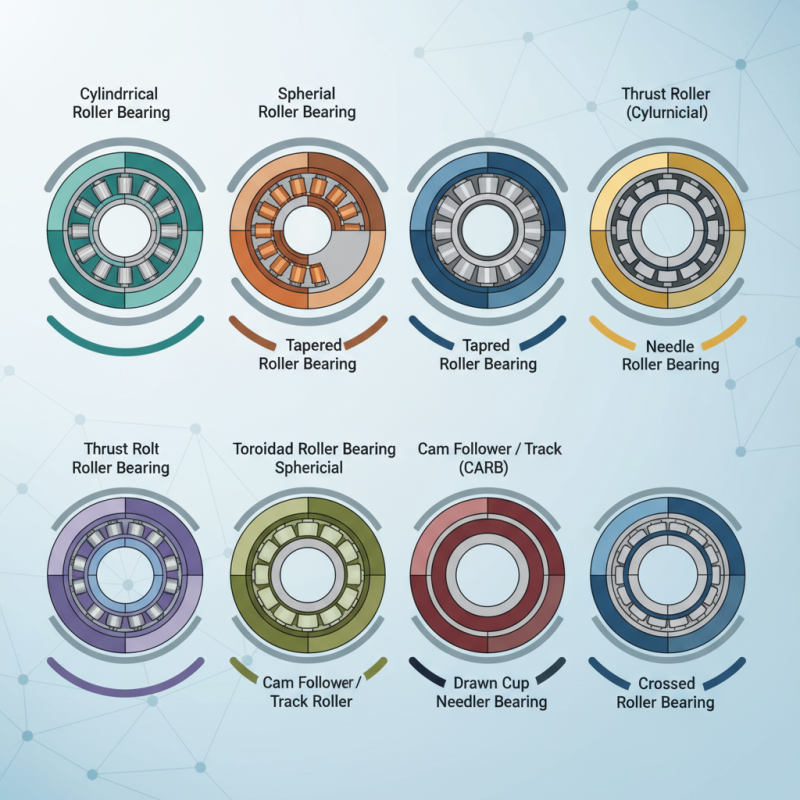
Cylindrical roller bearings are commonly used in heavy-load contexts. They can handle high radial loads while maintaining speed.
Spherical roller bearings offer a unique advantage, as they can accommodate misalignment. The design includes two rows of rollers and a common sphere-like raceway.
Tapered roller bearings are prevalent in automotive applications. Their ability to handle axial and radial loads makes them versatile.
Different sectors require specific types of roller bearings. For example, wind turbines rely on large spherical roller bearings to operate efficiently. In contrast, precision machinery often utilizes needle roller bearings for tight spaces. Each type has unique characteristics, but challenges remain.
Misalignment or improper lubrication can lead to issues, decreasing efficiency. It’s important to assess the specific needs of your application.
Load Capacities and Performance Factors of Various Bearing Types
When choosing roller bearings, understanding load capacities is crucial. Each type has unique performance factors. For instance, deep groove bearings offer high radial load support. In contrast, tapered roller bearings excel in handling axial loads. Knowing the differences helps in application specifics.
Tips: Always consult specifications. Not all bearings fit every situation. Miscalculating load requirements can lead to failure. Load ratings are essential for longevity.
Consider environmental factors. High temperatures can affect performance. If space is limited, miniaturized bearings might be necessary. The design should accommodate movement and alignment. Sometimes, a common type may not suit specialized tasks, leading to inefficiency.
Integrate testing in your selection process. Even well-rated bearings can perform poorly in unexpected conditions. Regular monitoring can highlight issues early. Take time to analyze your needs and experiment with different types. There’s always room for improvement in bearing selection.
Common Industries Utilizing Roller Bearings and Their Efficiency Metrics
Roller bearings play a pivotal role in various industries, enhancing efficiency and performance. For instance, in the automotive sector, they reduce friction in engines and transmissions. This leads to better fuel economy and extends the lifespan of vehicles. The manufacturing industry also benefits greatly. Roller bearings support heavy machinery, minimizing wear and tear. This boosts productivity on the shop floor.
Tips: Regular maintenance is crucial. Check for signs of wear, such as unusual noises or vibrations. Timely inspections can prevent costly downtime. Operators often overlook this step, which can lead to failures.
In the aerospace sector, roller bearings are vital too. They meet stringent safety standards while ensuring lightweight designs. However, the complexity of their application sometimes leads to mistakes. Engineers need to focus on precise specifications. Small errors can have significant consequences. Learning from these challenges is essential for future improvements.
Top 10 Roller Bearing Types You Should Know About
| Bearing Type |
Common Industries |
Load Capacity (kN) |
Speed Limit (RPM) |
Efficiency (%) |
| Deep Groove Ball Bearing |
Manufacturing, Automotive |
25-100 |
6000-12000 |
85 |
| Insert Bearing |
Food Processing, Agriculture |
20-80 |
3000-6000 |
80 |
| Spherical Roller Bearing |
Mining, Construction |
30-200 |
1000-3000 |
75 |
| Tapered Roller Bearing |
Automotive, Aerospace |
50-250 |
3000-8000 |
82 |
| Angular Contact Ball Bearing |
Machine Tool, Robotics |
15-100 |
5000-15000 |
90 |
| Self-Aligning Ball Bearing |
Textile, Woodworking |
20-150 |
2000-5000 |
78 |
| Needle Bearing |
Automotive, Machine Instruments |
10-80 |
1500-10000 |
85 |
| Thrust Ball Bearing |
Marine, Heavy Machinery |
30-120 |
1000-3000 |
77 |
| Cylindrical Roller Bearing |
Automotive, Aerospace |
40-200 |
2000-6000 |
83 |
| Split Bearing |
Wind Energy, Mining |
50-300 |
1000-4000 |
75 |
Future Trends in Roller Bearing Technology and Innovations
The landscape of roller bearing technology is evolving rapidly. Innovations are pushing the boundaries of performance and efficiency. Advanced materials, like hybrid ceramics, significantly reduce friction and wear. In fact, a recent industry report from [insert industry source] projects a growth of 7% in the adoption of ceramic bearings.
Innovative designs also contribute to better load distribution. This can lead to extended bearing life and improved machinery profitability. As machines become more intricate, roller bearings are adapting. Smart technology is on the rise, with sensors integrated into bearings to monitor conditions in real-time. The data collected helps in predictive maintenance, minimizing downtime.
**Tips:** Choose bearings based on load capacity and operating conditions. Conduct regular inspections to ensure optimum performance. Stay informed about emerging materials and technologies to enhance your application. As the industry progresses, staying ahead means understanding both the advancements and the potential challenges that come with them.
Top 10 Roller Bearing Types You Should Know About
This chart illustrates the load capacities of various types of roller bearings. Understanding these capabilities is crucial for selecting the appropriate bearing type for specific applications in engineering and manufacturing.