Welcome to our websites!

Top Heavy Duty Pillow Block Bearings Suppliers

Selecting the Top Heavy Duty Pillow Block Bearings Suppliers requires more than comparing catalog prices. These assemblies support rotating shafts in conveyors, crushers, fans, agricultural equipment, and bulk-material systems. A bearing failure can stop an entire production line. The sound changes first: a low hum becomes a rough metallic vibration.

Fortune Business Insights reported that the global bearings market reached approximately USD 132.7 billion in 2023. Its report also projects continued growth through 2032, driven by industrial automation, transportation, and machinery demand. These figures show a large market, but they do not prove supplier quality. Buyers should examine traceability, testing procedures, production capacity, and technical support. ISO 281 load-rating methods provide a useful reference for bearing-life calculations. ISO 9001 certification can also indicate controlled quality processes, although certification alone is not enough.

Reliable Heavy Duty Pillow Block Bearings suppliers should explain housing materials, seal designs, lubrication limits, shaft tolerances, and operating temperatures. They should provide dimensional drawings and measurable load data. Field experience matters. A supplier that has supported dusty quarry conveyors may understand sealing better than a general online distributor. Still, claims require verification. Ask for inspection records, sample reports, and application references. No supplier is perfect. Even respected manufacturers can face lead-time pressure or inconsistent regional support. That weakness deserves attention, not concealment. This guide compares leading suppliers through product durability, engineering expertise, compliance, delivery reliability, and after-sales service. The aim is practical judgment: finding bearings that keep equipment moving when dust, shock loads, and long operating hours become unavoidable.
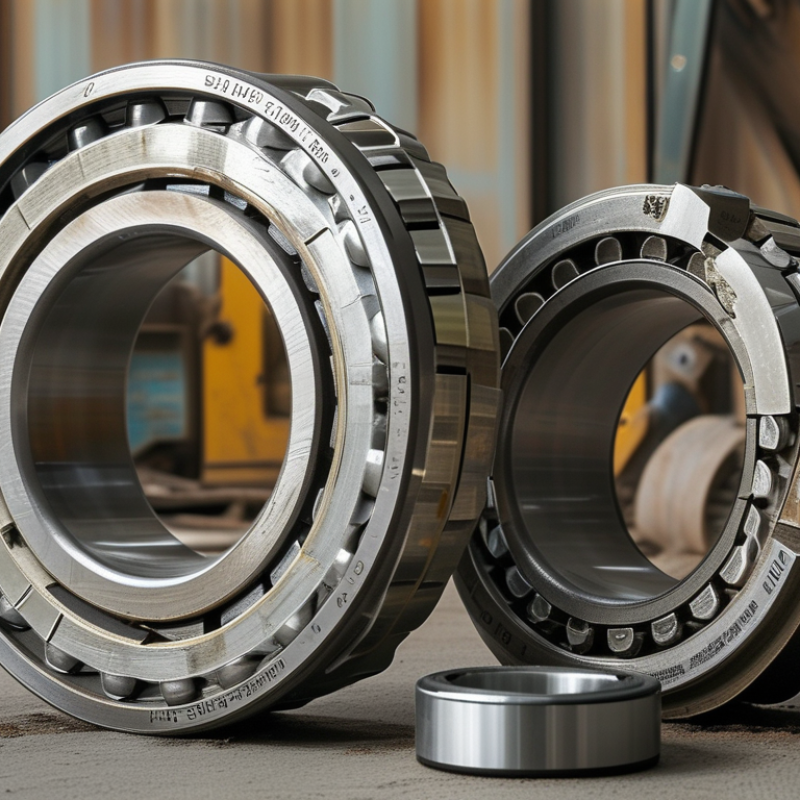
Top Heavy Duty Pillow Block Bearings Suppliers

Types of Heavy Duty Pillow Block Bearings

Heavy duty pillow block bearings support rotating shafts in demanding machinery. Their design combines a bearing insert with a strong housing. This arrangement helps manage shock loads, vibration, and moderate shaft misalignment. Choosing the right type requires more than checking the shaft diameter.

Split-housing pillow block bearings have a two-piece body for easier inspection and replacement. They suit conveyors, crushers, and large processing equipment. Solid-housing types provide greater rigidity and often perform well under steady radial loads. Flanged pillow block bearings attach to vertical or side surfaces, saving space around the shaft. Take-up units allow shaft-position adjustment, which helps maintain conveyor belt tension. For higher loads, spherical roller bearing inserts are often preferred. Self-aligning ball inserts may suit lighter loads and moderate misalignment. The wrong insert can overheat quickly.

Tips: Match the bearing to load direction, speed, temperature, and contamination. Check the seal design before installation. Dusty areas need stronger protection. Grease selection matters too. A clean shaft and accurate mounting prevent early damage. I have seen failures caused by loose fasteners, not poor bearing quality. That detail is easy to overlook. Recheck alignment after several operating hours, because the first installation may not be perfect.

Key Features and Performance Standards

Heavy-duty pillow block bearings must survive dust, shock loads, vibration, and imperfect alignment. Their key features begin with housing strength, shaft-locking security, and effective sealing. Cast iron housings suit demanding machinery, while split designs simplify inspection and replacement. Relubrication ports should remain accessible near the machine frame.

Performance claims should follow recognized standards, not vague catalog language. ISO 281 defines basic rating life, or L10 life, at 90% reliability under stated load conditions. ISO 76 evaluates static load capacity and helps engineers assess brinelling risks during impacts or machine stoppages. ISO 492 also establishes dimensional and running accuracy tolerances for rolling bearings. These references make supplier comparisons more reliable.

Field experience shows that installation errors often shorten bearing life more than moderate overloads. A clean shaft, correct mounting torque, and measured alignment matter. Very much. The U.S. Department of Energy reports that motor-driven systems can consume over 70% of industrial electricity in some facilities, so friction and poor lubrication deserve attention.

Suppliers should provide load ratings, temperature limits, seal details, vibration data, and maintenance intervals. I would also question unusually long life claims without test conditions. Real machinery is rarely perfect, and published performance can still need verification through temperature checks, vibration monitoring, and early inspection.

How to Evaluate Heavy Duty Bearing Suppliers

Top Heavy Duty Pillow Block Bearings Suppliers

How to Evaluate Heavy Duty Bearing Suppliers

Choosing a heavy duty pillow block bearing supplier requires more than comparing catalog prices. Study the supplier’s engineering experience, material controls, and testing records. A reliable supplier should explain load ratings, shaft compatibility, housing strength, sealing options, and lubrication requirements in clear language. Vague answers usually signal avoidable risk.

Ask for documented inspection procedures. These should cover dimensional checks, hardness testing, surface finish, and final assembly. Verify whether production follows recognized quality systems and whether batch records are available. Request sample certificates, not just general promises. Ask for traceability.

Field experience matters. A supplier should understand dusty conveyors, vibrating crushers, outdoor drives, and high-temperature equipment. Ask how previous applications influenced bearing selection. Their answer should address misalignment, shock loads, corrosion, and maintenance intervals. Practical details reveal expertise. Marketing language does not.

Check technical support after delivery. Can engineers review installation drawings? Do they provide fitting guidance, torque values, and relubrication advice? Confirm response times for failures and replacement requests. A strong supplier measures performance beyond the initial sale.

Do not overlook consistency. I once treated a low unit price as the best value, then discovered uneven seal performance across batches. That assumption was weak. Compare total operating cost, service life, downtime exposure, and spare-part availability. Ask for independent test data when possible. Test it yourself. A supplier may have excellent documents but limited application judgment. Evaluate both.

Top Heavy Duty Pillow Block Bearings Suppliers - How to Evaluate Heavy Duty Bearing Suppliers

Evaluation Category Supplier Evaluation Dimension Weight Recommended Benchmark for Heavy-Duty Pillow Block Bearings Documents or Data to Verify Scoring Guidance
Product Compliance Dimensional and tolerance conformity 12% Housing, shaft, bore, width, and mounting dimensions should match the applicable bearing and housing drawings. Tolerances should be stated rather than described only as “standard.” Controlled product drawings, dimensional inspection reports, tolerance tables, and sample measurements. 5 = Fully documented
3 = Partially documented
1 = Not documented
Load Performance Dynamic and static load-rating data 14% The supplier should provide basic dynamic load rating, basic static load rating, limiting speed, and application load assumptions. Ratings should be traceable to recognized rolling-bearing calculation methods. Technical datasheets, calculation sheets, load-rating declarations, and application selection reports. 5 = Complete ratings and calculations
3 = Ratings only
1 = No usable data
Material Quality Bearing steel and housing material traceability 10% Material grades, heat-treatment requirements, hardness ranges, and batch traceability should be defined for rings, rolling elements, shafts, and housings. Material certificates, heat-treatment records, hardness reports, and lot-traceability procedures. 5 = Full traceability
3 = Partial records
1 = No traceability
Sealing and Lubrication Protection against contamination and lubricant compatibility 12% The supplier should clearly identify seal construction, grease type, fill quantity, relubrication requirements, operating-temperature range, and compatibility limitations. Seal specifications, grease technical data sheets, relubrication instructions, and contamination-resistance test results. 5 = Detailed operating guidance
3 = Basic seal information
1 = Unclear requirements
Manufacturing Quality Process control and inspection capability 14% Critical characteristics should be monitored through incoming inspection, process checks, final inspection, and nonconformance control. Measuring equipment should be calibrated. Quality manual, process-control plans, inspection records, calibration certificates, and corrective-action reports. 5 = Systematic controls
3 = Basic inspection
1 = Informal controls
Testing Capability Performance and endurance validation 10% Testing should address noise, vibration, temperature rise, rotational performance, sealing, load capacity, and endurance under conditions relevant to the application. Test plans, test reports, equipment calibration records, acceptance criteria, and sample failure analyses. 5 = Application-relevant testing
3 = Limited testing
1 = No test evidence
Standards and Certification Management-system and product certification 8% The supplier should maintain a verifiable quality-management system and provide relevant conformity documents for the destination market and application. Valid certificates, scope statements, audit records, declarations of conformity, and certification-body verification. 5 = Current and verifiable
3 = Limited certification
1 = Unverified claims
Supply Reliability Capacity, lead time, and continuity planning 8% The supplier should state normal lead time, minimum order quantity, production capacity, safety-stock policy, and contingency plans for raw-material or equipment disruptions. Capacity statements, lead-time history, inventory policy, production schedules, and business-continuity plans. 5 = Stable and transparent
3 = Adequate information
1 = Uncertain supply
Technical Support Application engineering and selection assistance 6% Technical support should cover bearing selection, shaft and housing fits, static and dynamic load checks, lubrication intervals, installation, alignment, and failure analysis. Engineering response samples, selection tools, installation manuals, service procedures, and case-based calculations. 5 = Expert and responsive
3 = General support
1 = Product-only support
Commercial Control Total cost and warranty conditions 6% Evaluation should include purchase price, tooling, freight, inspection, maintenance, expected service life, warranty period, exclusions, and claim-response procedure. Itemized quotations, warranty terms, service-life assumptions, return policy, and historical claim data. 5 = Transparent total-cost model
3 = Price-focused offer
1 = Unclear terms

Manufacturing, Quality Control, and Certifications

Top Heavy Duty Pillow Block Bearings Suppliers

Reliable heavy duty pillow block bearing suppliers begin with controlled manufacturing, not impressive sales language. They select ductile iron or steel housings according to load, vibration, and operating conditions. Machining must maintain accurate bore dimensions and stable mounting surfaces. Small errors can create noise, heat, and premature wear.

Experienced manufacturers monitor heat treatment, shaft fit, seal installation, and grease filling at every stage. Inspectors use calibrated gauges to check hardness, roundness, clearance, and housing alignment. Sample bearings may undergo load, rotation, temperature, and vibration tests. Traceable batch records connect each bearing to its materials and inspection results. This detail matters when equipment runs continuously in dusty plants or outdoor conveyors.

Quality systems should be supported by recognized certifications, such as ISO 9001, when the certificate covers the relevant production site and scope. Environmental or occupational certifications can also show broader management discipline, but they do not replace product testing. Buyers should verify certificate validity, issuing bodies, audit dates, and actual manufacturing locations. A supplier may provide excellent documents yet still miss a practical assembly issue. That happens. Site audits, trial orders, and clear acceptance criteria reveal more than brochures. Open reporting of nonconforming parts also suggests a mature quality culture, even when perfection is impossible.

Applications, Customization, and Purchasing Factors

Top Heavy Duty Pillow Block Bearings Suppliers

Applications depend on load, contamination, speed, and mounting conditions.

Heavy duty pillow block bearings commonly serve conveyors, crushers, fans, agricultural machinery, and bulk material systems. In dusty plants, sealed housings and relubrication access can matter more than maximum speed.

A 2024 Grand View Research report estimates the global bearings market will exceed USD 170 billion by 2030. This growth reflects expanding industrial automation and transport equipment demand.

Customization should begin with measurements, not assumptions.

Suppliers may modify bore sizes, housing materials, seals, grease types, and mounting holes. Stainless steel suits washdown areas, while cast iron often supports rugged, lower-cost installations.

Ask for dynamic load ratings, static load ratings, operating temperature limits, and ISO 281 fatigue-life calculations. Request drawings and inspection records.

Small details matter. Shaft fit errors can create vibration, heat, and premature failure.

MarketsandMarkets reported that predictive maintenance is gaining adoption across industrial sectors, making sensor-ready bearing housings increasingly practical. Still, sensors are not always necessary. A clean lubrication schedule may outperform an expensive monitoring package in a small facility.

Purchasing teams should compare total cost, not unit price. Include lead time, spare availability, packaging, installation tools, warranty terms, and technical support.

I would also test one batch before approving a large order. Supplier certificates look reassuring, but field performance deserves verification.