How to Choose High Speed Pillow Block Bearings for Your Needs?
Choosing the right High Speed Pillow Block Bearings is crucial for optimal machinery performance. Expert John H. Smith, a well-respected engineer in the field, emphasizes, “The right bearings can dramatically improve efficiency.” This highlights the importance of making informed choices.
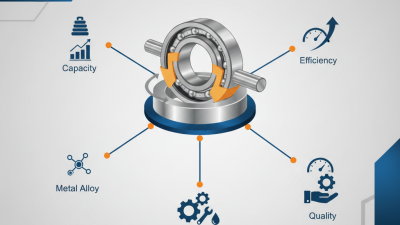
Pillow block bearings are essential in various applications, from manufacturing to robotics. When selecting them, consider their speed rating, load capacity, and environmental conditions. Each factor plays a significant role in durability and efficiency. The decision may seem simple, but it often requires careful evaluation.
Many users overlook the specifics, leading to premature failures. This underscores the importance of consulting industry experts and materials. Learning from past mistakes can foster better choices. Aim for high-quality, reliable components that meet your operational needs. After all, investing in dependable High Speed Pillow Block Bearings pays off in the long run.

Understanding Pillow Block Bearings and Their Applications
Pillow block bearings are essential components in various machinery. They are mounted in a housing, providing support for rotating shafts. This design helps reduce friction and wear, increasing efficiency in applications. Industries such as automotive, manufacturing, and agriculture utilize these bearings for their reliability and adaptability.
Understanding their applications is crucial. For instance, in conveyor systems, pillow block bearings support heavy loads with minimal friction. This enhances the lifespan of the machinery. In fan applications, these bearings ensure smooth operation at high speeds. However, not all pillow block bearings are the same; selecting the right type for specific needs is important. Consideration of load capacity, speed rating, and environmental conditions can lead to better performance.
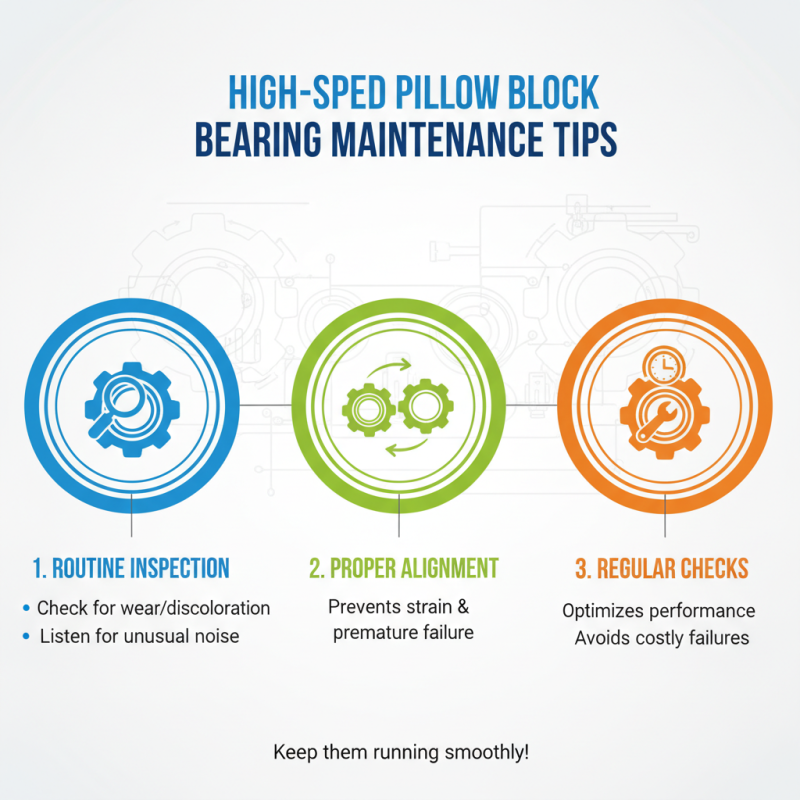
It's important to reflect on the potential challenges when choosing these components. Improper selection may result in premature failure or increased maintenance costs. Understanding the nuances of your operating environment can guide better choices. Accurate alignment and installation play significant roles in achieving optimal performance, so investing time in evaluation is key.
Performance Comparison of High-Speed Pillow Block Bearings
This chart compares the performance characteristics of two different high-speed pillow block bearings based on key dimensions such as load capacity, speed rating, vibration level, and temperature rating.
Identifying Key Specifications for High-Speed Pillow Block Bearings
When choosing high-speed pillow block bearings, key specifications play a crucial role. The bearing’s material composition, often steel or ceramic, directly impacts performance at elevated speeds. Ceramic bearings, for instance, can operate at temperatures exceeding 200°C, while steel bearings usually handle up to 150°C. A report by the Bearing Design Institute revealed that nearly 60% of bearing failures occur due to inadequate temperature management.
Another essential specification is the bearing's load rating. Bearings designed for high-speed applications must support axial and radial loads effectively. The dynamic load rating is vital; a lower rating may compromise performance. According to industry standards, the load limit significantly decreases as speed increases. A precise calculation of the bearing's operating conditions can prevent early failure, saving time and resources in repairs.
Vibration and noise levels are also critical. High-speed bearings often produce different frequencies during operation. Excessive vibration can lead to premature wear. Monitoring vibration levels is crucial to maintaining optimal operation. The American Society of Mechanical Engineers suggests that keeping vibration below 0.1 g significantly increases bearing lifespan. Adopting a proactive approach to these specifications can enhance reliability and overall system performance.
How to Choose High Speed Pillow Block Bearings for Your Needs? - Identifying Key Specifications for High-Speed Pillow Block Bearings
| Specification |
Description |
Example Value |
| Bore Diameter |
The internal diameter of the bearing, which fits the shaft. |
25 mm |
| Outer Diameter |
The external diameter of the bearing housing. |
52 mm |
| Material |
The material used for the bearing housing and inner ring. |
Cast Iron |
| Maximum RPM |
The highest speed the bearing can operate safely. |
3000 RPM |
| Load Rating |
The maximum load the bearing can support. |
5000 N |
| Seal Type |
Type of seal that prevents contaminants from entering the bearing. |
Double Lip Seal |
| Lubrication Type |
Method of lubrication, either grease or oil. |
Grease |
Factors to Consider When Selecting Bearing Materials
When selecting high-speed pillow block bearings, the choice of bearing materials is crucial. Different materials have varying properties that can greatly impact performance. For instance, steel bearings are strong and reliable. However, they might rust in humid environments. In contrast, stainless steel bearings resist corrosion. They work well in wet conditions but can be costlier.
Another important material is polymer. Polymer bearings are lightweight and can reduce friction. They perform well in low-speed applications. Yet, they may not handle heavy loads as efficiently. It’s essential to assess the operational environment. Dust, heat, and moisture can all influence material performance.
Durability is also a factor to consider. Bearings made from composite materials offer a balance of strength and low weight. They can be beneficial in dynamic applications. Yet, some may wear out faster than others. Testing different materials can help determine the best fit for your needs. Understanding these nuances can enhance your decision-making process and overall effectiveness in selecting the appropriate bearings.
Evaluating Load Capacity and Speed Ratings for Optimal Performance
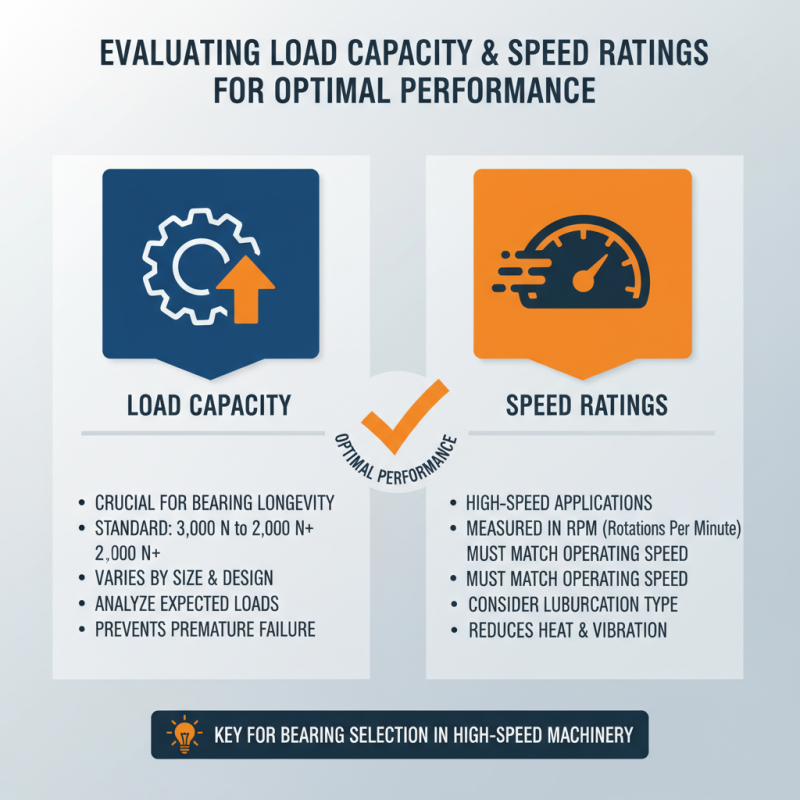
When selecting high-speed pillow block bearings, evaluating load capacity and speed ratings is crucial for optimal performance. Different applications require different load capacities. Typically, standard load ratings start from 3,000 N (newtons) and can go upwards of 20,000 N, depending on the bearing size and design. Careful analysis of the expected load conditions can prevent premature failure of the bearings.
Speed ratings are another vital factor. Many pillow block bearings are rated for speeds between 1,000 to 40,000 RPM. Exceeding these ratings can lead to overheating, which reduces the lifespan of the bearing. For high-speed applications, a bearing with a fatigue limit of at least 10% of the dynamic load rating is recommended. Not all bearing arrangements can support high load and speed together. It is essential to evaluate alignment and lubrication to avoid performance issues.
Not every choice of bearing will suit all conditions. Some setups may require bearings with better heat dissipation. Consider the environment where the bearings will be used. Factors like temperature and exposure to contaminants matter. Feedback from users highlights that pushing limits often leads to higher maintenance costs. Scrutinizing both load capacity and speed ratings is essential. A mismatch may have costly implications.