How to Choose the Right Pillow Block Flange Bearing for Your Applications?
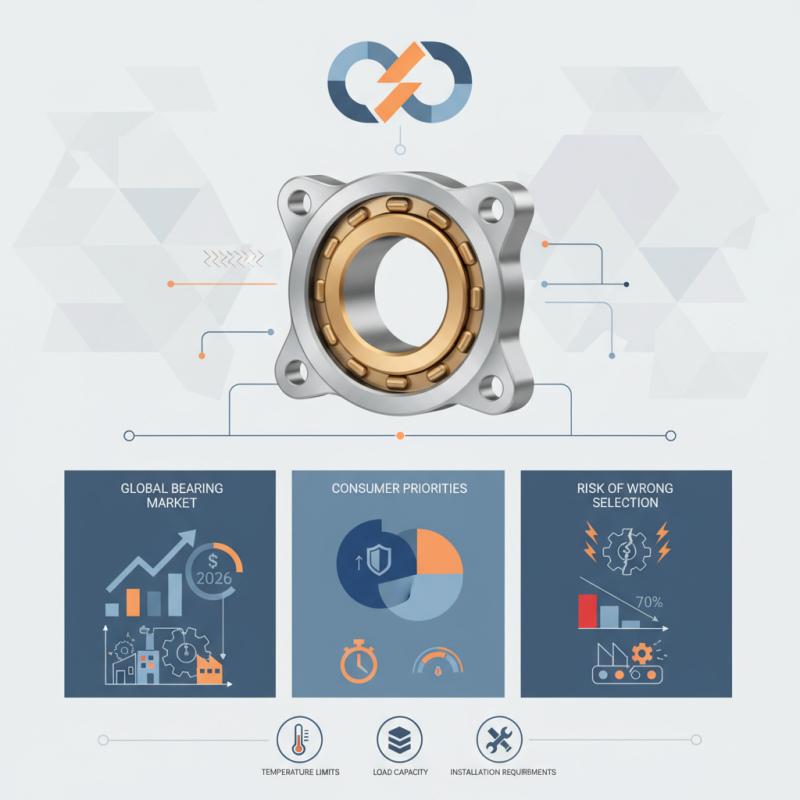
Choosing the right Pillow Block Flange Bearing is crucial for many applications. These components are key in supporting rotating shafts and reducing friction. The global bearing market is expected to reach $130 billion by 2026, driven by increasing industrial activities and demand for efficient machinery.
Pillow Block Flange Bearings come in various designs and materials. Selecting the right type can significantly impact performance. According to a study by MarketWatch, performance and reliability are top priorities for consumers, with 75% prioritizing these attributes. Understanding load capacity, temperature limits, and installation requirements is essential.
However, not every choice is straightforward. The wrong bearing can lead to machinery failure and costly downtime. Industry reports indicate that about 20% of all industrial machinery failures are attributed to incorrect bearing selection. This statistic highlights the need for careful consideration and thorough evaluation of your specific application needs when choosing a Pillow Block Flange Bearing.
How to Assess Load Capacity in Pillow Block Flange Bearings
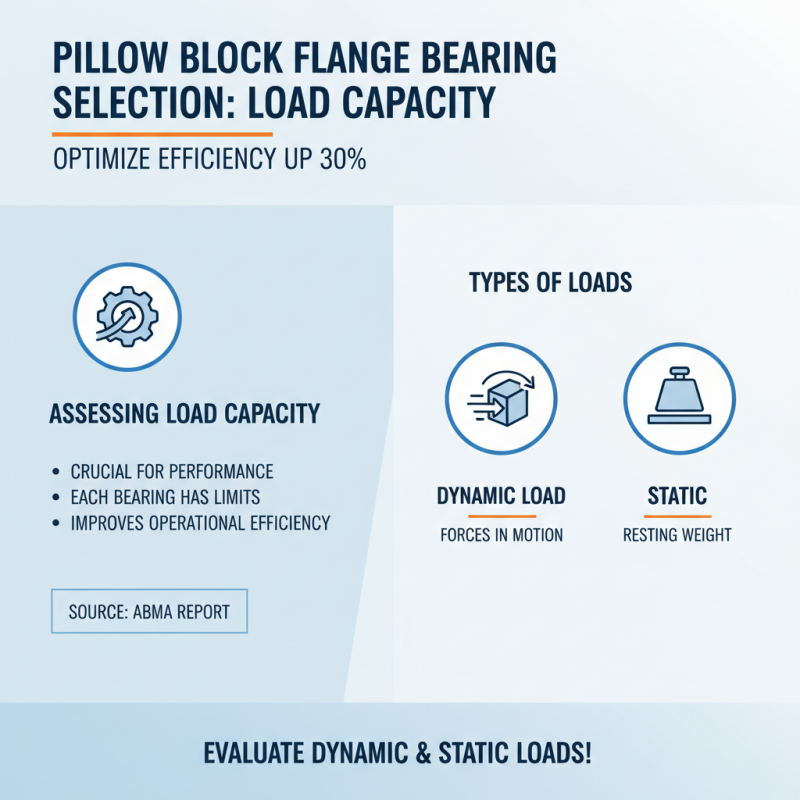
When selecting a pillow block flange bearing, assessing load capacity is crucial. Each bearing is designed to handle specific loads. A report by the American Bearing Manufacturers Association (ABMA) indicates that accurate load assessment can improve operational efficiency by up to 30%. Evaluating dynamic and static loads is essential. Dynamic load refers to the forces in motion, while static load pertains to resting weight.
Consider how different materials affect load capacity. For instance, steel bearings generally support heavier loads than plastic counterparts. But the trade-off can be weight and corrosion resistance. Many manufacturers provide load rating charts. However, these ratings often assume ideal conditions. Real-life applications can differ significantly, impacting performance.
Don’t forget to consider the environment. Temperature, humidity, and even exposure to chemicals can alter load capacity. It’s not just about choosing a bearing; it’s about ensuring it fits your specific application needs. Users sometimes overlook these details. Ignoring them can lead to premature failure. Hence, reflect on your real application scenarios. Prioritize reliability and consult data closely.
Understanding Material Selection for Durability and Performance
Choosing the right pillow block flange bearing involves careful consideration of material selection. The material directly affects durability and performance. Common materials include cast iron, steel, and thermoplastics. Each offers distinct advantages. Cast iron is robust but can be heavy. Steel provides strength but may corrode without proper treatment.
Thermoplastics are lighter and resistant to chemicals. However, they may not support heavy loads as well. It's essential to evaluate the application's specific needs, such as load capacity and environmental conditions. Weight factors in, too. A lighter bearing allows for easier installation but might compromise strength.
Tips: Always check the working temperature range of the material. A mismatch can lead to failure. Consider the environment. High humidity might necessitate corrosion-resistant materials. Test different options if possible. It helps in understanding performance under various conditions. Sometimes, the obvious choice isn't the best one. Reflect on past experiences to guide future decisions.
Material Selection for Pillow Block Flange Bearings
This chart illustrates the durability ratings for various materials used in pillow block flange bearings. A higher rating indicates better performance and longevity under operational conditions.
Evaluating Temperature and Environmental Conditions Affecting Bearings
When selecting a pillow block flange bearing, understanding temperature and environmental conditions is crucial. Temperature variations can directly impact bearing performance. For example, operating a bearing at higher temperatures can lead to premature failure. A report from the American Bearing Manufacturers Association notes that temperature increases of just 10 degrees Celsius can double the wear rate of bearings.
Environmental factors also play a major role. High humidity can lead to corrosion, while dirt and dust can introduce contaminants. Research shows that bearings operating in harsh environments can have their lifespans reduced by up to 50%. This emphasizes the need for careful evaluation of the surroundings where the bearing will be installed. Choosing materials that resist moisture or incorporate seals can help mitigate risks.
Maintenance is also a significant factor. A study highlighted that 30-40% of bearing failures are due to improper lubrication. Regular inspections can help identify signs of wear early. Ignoring these factors might lead to unexpected breakdowns. The lesson here is clear: Understand your operating conditions to make better choices. Evaluate your specific needs, and watch your bearings perform effectively.
How to Choose the Right Pillow Block Flange Bearing for Your Applications? - Evaluating Temperature and Environmental Conditions Affecting Bearings
| Bearing Type |
Max Operating Temperature (°C) |
Material |
Environmental Suitability |
Typical Applications |
| Steel Pillow Block |
120 |
Steel |
Moderate humidity, dust |
Industrial machinery, conveyors |
| Stainless Steel Pillow Block |
150 |
Stainless Steel |
Corrosive environments |
Food processing, marine applications |
| Plastic Pillow Block |
80 |
Plastic |
Low strength, dry environments |
Light-duty applications, HVAC systems |
| Bronze Pillow Block |
200 |
Bronze |
High temperature and load |
Heavy machinery, automotive |
| Ceramic Pillow Block |
300 |
Ceramic |
Extreme temperature, low friction |
Aerospace, high-speed applications |
Identifying the Right Mounting Configuration for Stability
Choosing the right mounting configuration for pillow block flange bearings is crucial for ensuring stability and performance in various applications. A report from the International Journal of Engineering and Technology indicates that proper alignment can reduce wear and tear significantly, leading to a 20% increase in bearing lifespan. This can ultimately save costs in replacement and downtime.
Different configurations, such as the set screw or eccentric locking designs, serve specific needs. Eccentric locking bearings allow for quick adjustments and secure locking, which is beneficial in dynamic applications. However, they can be challenging to install correctly. Misalignment can lead to vibrations. Vibration frequencies exceeding 1.5 times the running speed can shorten operational life and compromise stability.
The mounting surface also plays a role in stability. Uneven surfaces can introduce stress. Bearing alignment must be within 0.003 inches, as per industry standards. Failure to meet this can lead to premature failure and unexpected maintenance. There’s no one-size-fits-all solution. Each application has its unique requirements. Reflect carefully on operational conditions and potential adjustments needed over time.
Analyzing Cost vs. Quality Trade-offs in Bearing Selection
When selecting a pillow block flange bearing, cost and quality are often at odds. Consumers may lean toward cheaper options but may sacrifice durability. Quality bearings can withstand harsh conditions, which often translates into lower replacement costs over time. A cheap alternative might save money upfront, but it could lead to failures.
Tip: Always evaluate the application’s demands. Are you dealing with heavy loads or high speeds? A high-quality bearing might be necessary for those scenarios. Cheap alternatives might not perform as expected and may cause more significant issues down the line.
Balancing cost and quality involves assessing the environment. If a bearing operates in a dusty or wet area, a robust option protects it. In many cases, the cheapest option isn’t the most cost-effective in the long run.
Tip: Regular maintenance can extend the life of a lower-cost bearing. However, if the maintenance is extensive or complicated, it might be better to invest in quality from the outset. Consider the total cost of ownership rather than just the initial price.