2026 Top China Bearing Types for Global Buyers
Choosing the right bearing in 2026 requires more than comparing prices or browsing a supplier catalog. Global buyers must match bearing design, load conditions, operating speed, and maintenance plans. This guide examines the leading China Bearing types used across machinery, automotive systems, agricultural equipment, and industrial production lines.
Deep groove ball bearings remain practical for common radial and moderate axial loads. Tapered roller bearings suit wheel hubs, gearboxes, and heavy rotating assemblies. Cylindrical roller bearings support higher radial loads when shaft movement and installation accuracy are carefully controlled. Spherical roller bearings help manage misalignment, especially in conveyors and mining equipment. Needle bearings save space, but their performance depends heavily on shaft hardness and lubrication.
Small details matter.
During supplier evaluation, experienced buyers should check dimensions, clearance classes, seal materials, cage design, grease specifications, and heat-treatment records. A clean inspection report is useful, but it cannot replace sample testing. Packaging also deserves attention. Moisture-resistant wrapping, labeled boxes, and readable batch numbers can prevent avoidable warehouse problems.
There is no universal best bearing.
Some product descriptions remain incomplete, and tolerance claims may require independent verification. Buyers should compare ISO-related documentation, factory quality controls, test results, and after-sales responsiveness. They should also confirm whether a supplier can maintain consistent performance across repeated orders. This overview offers a practical starting point, not a final purchasing decision. Real operating conditions may expose weaknesses that a polished catalog never shows.
China Bearing Classification by Load, Speed, Sealing, and ISO 281 Life Ratings
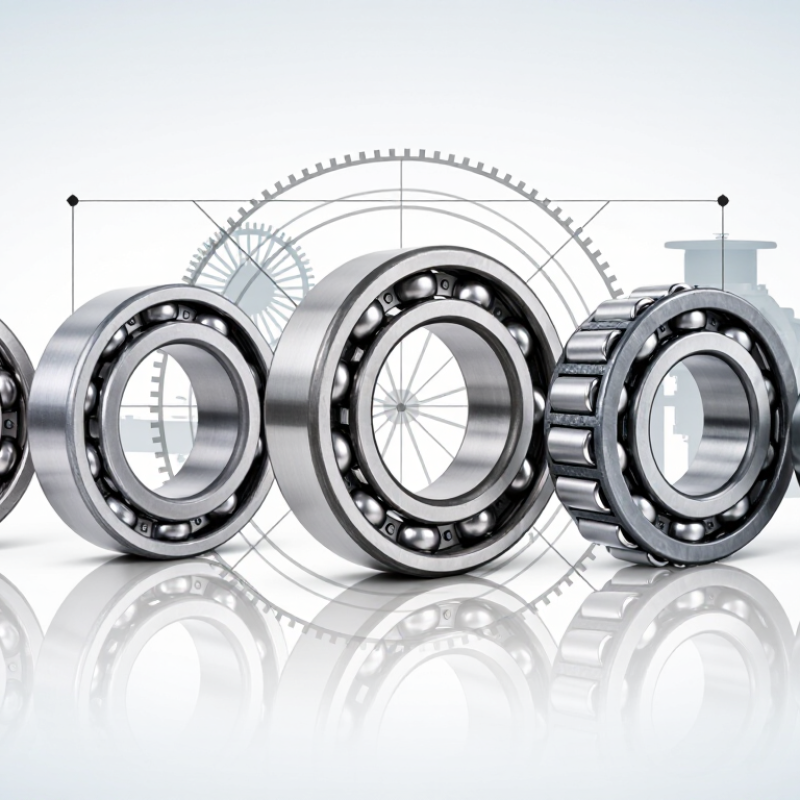
For global buyers in 2026, China bearing selection should begin with operating conditions, not catalogue popularity. Classification by load separates radial, thrust, and combined-load designs. Deep-groove ball bearings suit moderate radial loads and occasional axial forces. Tapered roller bearings handle heavier combined loads. Spherical roller bearings tolerate shaft misalignment, but usually need more space. Needle bearings save radial space while requiring accurate housing support. Small errors matter.
Speed changes the decision. Light ball bearings often run faster than roller designs, while grease type, clearance, and cage design set practical limits. Sealing also affects performance. Open bearings support relubrication. Shielded versions reduce contamination entry. Contact-sealed bearings protect better against dust and water, yet create more friction and heat. ISO 281 L10 life estimates when 90% of identical bearings may survive under stated conditions. It is not a guaranteed service date. Calculate with equivalent dynamic load, rated dynamic load, and actual speed. Real dirt, poor alignment, and shock can shorten life sharply.
Tips: Ask suppliers for load ratings, limiting speeds, seal material, internal clearance, heat-treatment records, and ISO 281 calculations. Request sample inspection reports. Compare measured noise and vibration, not only prices. A theoretically suitable bearing may still fail early when grease selection is overlooked. That detail deserves review.
2026 Top China Bearing Types for Global Buyers - China Bearing Classification by Load, Speed, Sealing, and ISO 281 Life Ratings
| Bearing Type | Primary Load Capability | Typical Load Direction | Typical Speed Capability* | Common Sealing Options | ISO 281 Life Exponent, p | Representative Dynamic Load Rating, C | Representative Equivalent Load, P | Calculated L10 Rating Life | Typical Applications |
|---|---|---|---|---|---|---|---|---|---|
| Deep-Groove Ball Bearing | Moderate radial and axial loads | Primarily radial; axial loads in both directions | High; approximately 8,000–30,000 r/min depending on size, clearance, lubrication, and cage | Open, metal shields, contact seals, non-contact seals | 3 | 20 kN | 5 kN | 64 million revolutions ≈ 1,778 h at 600 r/min |
Electric motors, pumps, gearboxes, fans, general machinery |
| Angular-Contact Ball Bearing | Combined radial and axial loads | Axial load in one direction per bearing; paired arrangements support both directions | High; approximately 6,000–20,000 r/min depending on contact angle and preload | Open, shields, seals; matched duplex sets are commonly open | 3 | 30 kN | 8 kN | 52.7 million revolutions ≈ 1,097 h at 800 r/min |
Machine-tool spindles, pumps, compressors, precision gearboxes |
| Self-Aligning Ball Bearing | Moderate radial loads with shaft or housing misalignment | Radial; limited axial capacity | Medium to high; approximately 3,000–12,000 r/min | Open, shields, contact seals | 3 | 18 kN | 4 kN | 91.1 million revolutions ≈ 3,033 h at 500 r/min |
Agricultural equipment, conveyors, textile machinery, long-shaft systems |
| Spherical Roller Bearing | Very high radial loads and substantial axial loads | Radial with bidirectional axial capacity | Low to medium; approximately 500–3,000 r/min | Open, metal shields in selected designs, heavy-duty seals in split housings | 10/3 | 250 kN | 50 kN | 357.2 million revolutions ≈ 11,907 h at 500 r/min |
Mining equipment, crushers, paper machines, conveyors, heavy gear drives |
| Cylindrical Roller Bearing | High radial loads and high stiffness | Primarily radial; axial capacity depends on flange design | Medium to high; approximately 2,000–12,000 r/min | Open, shields, seals in selected configurations | 10/3 | 160 kN | 35 kN | 151.7 million revolutions ≈ 4,214 h at 600 r/min |
Electric motors, generators, gearboxes, rolling mills, machine tools |
| Tapered Roller Bearing | High combined radial and axial loads | Radial and axial; usually installed as opposed pairs | Low to medium; approximately 1,000–5,000 r/min | Open, shields, integrated contact seals in selected units | 10/3 | 180 kN | 45 kN | 186.5 million revolutions ≈ 5,181 h at 600 r/min |
Vehicle hubs, axle systems, gear reducers, construction machinery |
| Needle Roller Bearing | High radial load capacity in a compact radial section | Radial; axial loads require separate thrust components | Medium to high; approximately 2,000–10,000 r/min | Open, drawn-cup sealed, machined-ring sealed | 10/3 | 75 kN | 18 kN | 128.1 million revolutions ≈ 2,669 h at 800 r/min |
Automotive transmissions, pumps, compressors, printing equipment |
| Thrust Ball Bearing | Light to moderate axial loads | Axial only; radial loads are generally not permitted | Low to medium; approximately 1,000–6,000 r/min | Normally open; shields or seals are application-specific | 3 | 35 kN | 10 kN | 42.9 million revolutions ≈ 1,191 h at 600 r/min |
Screw jacks, low-speed positioning systems, vertical shafts, turntables |
| Spherical Plain Bearing | Oscillating radial loads and misalignment | Radial; axial capacity depends on the contact design | Very low to low; typically oscillating or below 500 r/min | Maintenance-free liners, grease grooves, dust seals | ISO 281 rolling-fatigue formula generally not applicable to sliding contacts | Not normally stated as rolling-bearing C | Rated by load, oscillation angle, sliding speed, and wear criteria | Use manufacturer wear or service-life calculations | Linkages, suspension systems, hydraulic cylinders, construction equipment |
| Four-Point Contact Ball Bearing | Combined radial and axial loads with moment resistance | Radial, axial, and overturning moments | Low to medium; typically below 2,000 r/min for large sections | Open, integral seals, external labyrinth or lip seals | 3 | 120 kN | 30 kN | 64 million revolutions ≈ 533 h at 2,000 r/min |
Robotics, indexing tables, slewing mechanisms, precision positioning equipment |
- Speed ranges are general engineering ranges, not guaranteed operating limits. Actual permissible speed depends on bearing size, cage type, internal clearance, preload, lubrication, temperature, load, and sealing friction.
- For ISO 281 basic rating life, L10 = (C/P)p million revolutions, where p = 3 for ball bearings and p = 10/3 for roller bearings. The L10 value represents the life at which 90% of an identical group of bearings can be expected to survive under identical operating conditions.
- The illustrative calculations use the representative C and P values shown in each row. Actual values must be taken from the selected bearing's dimensional and load-rating data.
- ISO 281 basic rating life does not by itself account for contamination, lubrication condition, mounting errors, static overload, electrical erosion, corrosion, or seal deterioration. Modified rating life may be required for critical equipment.
- Shield and seal designations vary by manufacturer. Open bearings generally offer the lowest friction, while contact seals provide better protection against dust and moisture but usually reduce speed capability.
Related Posts
-
Exploring Split Pillow Block Bearings at the 138th Canton Fair 2025: Industry Insights and Trends
-
Exploring the Science Behind Bearing Manufacturing: Innovations in Bearing Factory Processes
-
Exploring Innovations in Bearing Factory Automation: A Guide for Modern Manufacturing
-

The Innovative Future of Bearing Factories and Their Role in Modern Technology
-
Top 10 Harga Pillow Block Bearing You Must Know?
-
Unlocking the Potential of China Top High Speed Pillow Block Bearings?